Every ecommerce brand I've worked with runs Google Analytics, and almost none of them trust the numbers it gives them. That's not paranoia. Sampling, consent mode gaps, and default attribution windows all quietly reshape the data before a human ever looks at a report.
The Blind Spots Add Up
GA4 was built to be a general-purpose analytics tool for millions of sites at once. That means it makes tradeoffs, aggressive sampling on higher traffic properties, default attribution models that quietly favor certain channels, and session definitions that don't match how a real customer actually shops. None of that is a bug. It's the cost of a one-size-fits-all product.
For a business trying to decide where to spend the next ad dollar, those tradeoffs are expensive. A channel that looks weak in GA4 might be the one actually closing the sale three touches later.
What I Built Instead
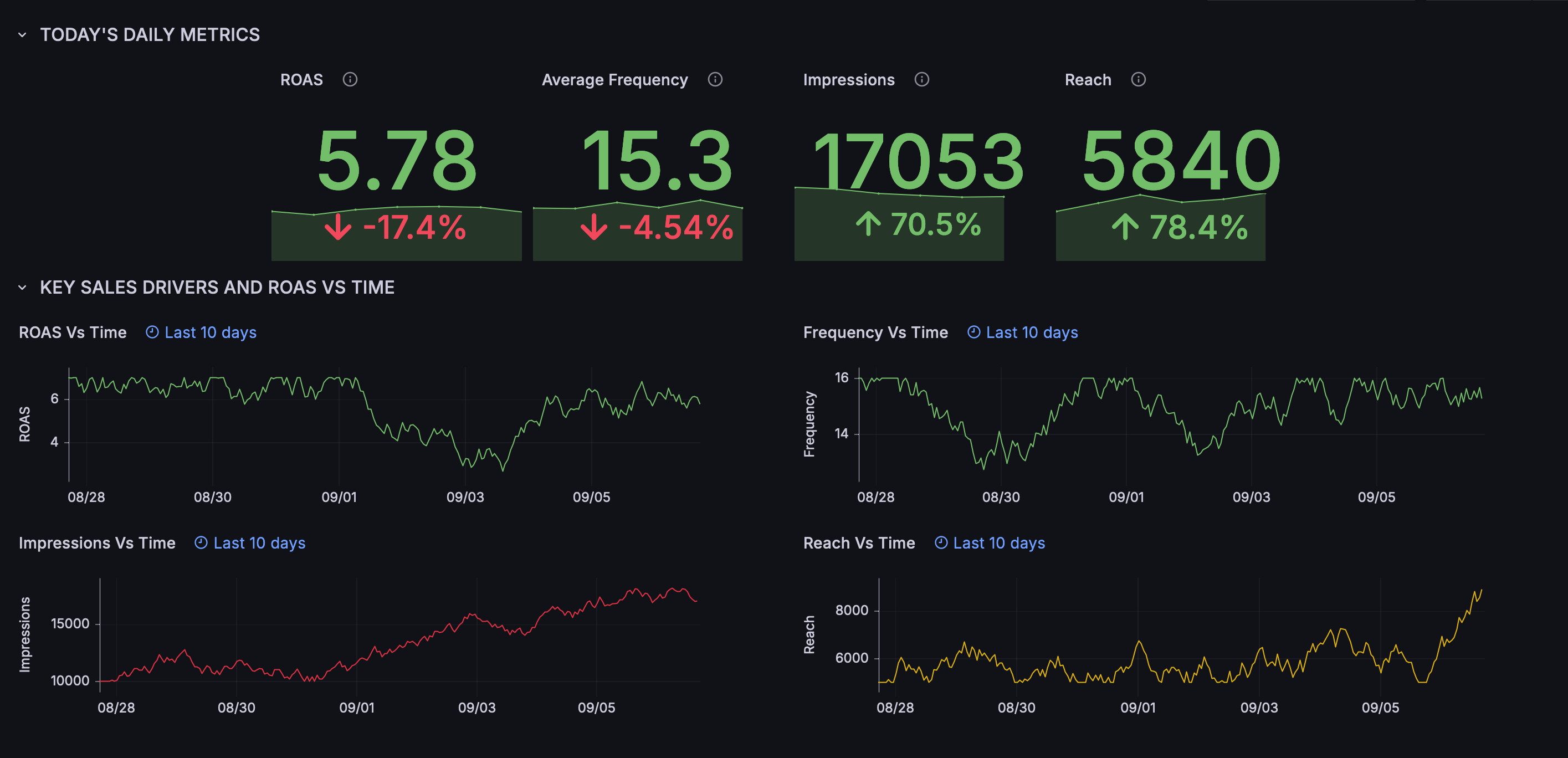
I designed a real-time tracking system in Python and SQL that logs on-site behavior at the event level, who is on the site right now, what they've clicked, and how that ties back to the specific ad, email, or post that brought them there. It connects directly to the ad platform APIs a business already uses, so spend and behavior live in one place instead of three dashboards that never agree.
That's the foundation for the multi-touch attribution models and A/B tests I run for clients. Not because off-the-shelf tools are useless, but because the businesses I work with need to know exactly what's working, not roughly what's working.